
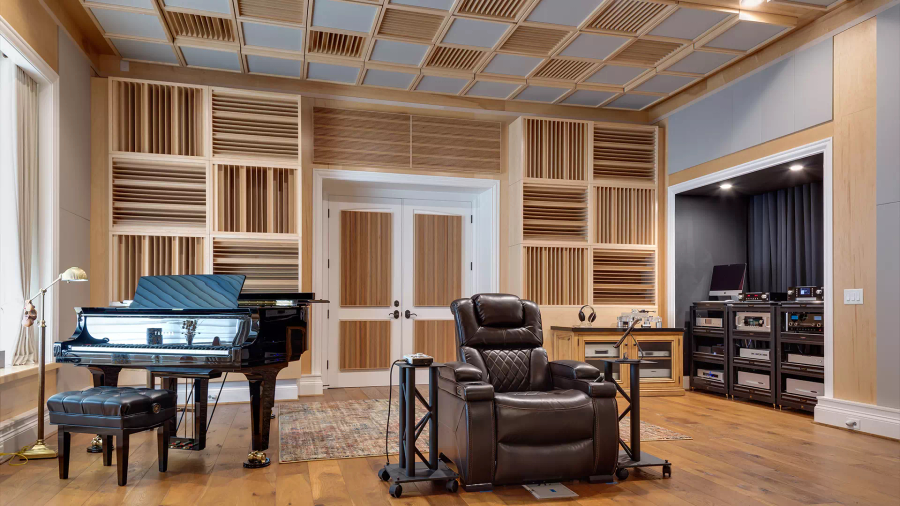
How Acoustic Design Makes Performance Spaces Sound Better
When we think about designing, we often focus on how it looks; the colors, furniture, lighting. But there’s another invisible element that shapes our experience: sound. Acoustic design plays a crucial role in shaping how a space feels, whether calm and comfortable or noisy and chaotic.
What Exactly Is Sound?
Sound is nothing more than vibrations traveling through air (or other materials) in the form of waves. Our ears pick up these waves, and our brain interprets them as music, speech, or noise.
- Pleasant sound: a favorite song, laughter, birds chirping
- Unpleasant sound: traffic horns, loud neighbors, constant machine hum
Understanding sound is the first step toward effective acoustic treatment.
Why Acoustic Design Matters
Acoustics is about controlling sound so it works for us, not against us. Without proper sound treatment, spaces can feel stressful and distracting. With professional acoustic design, spaces become clearer, calmer, and more functional.
Understand our solutions through the following examples:
- Auditoriums: Proper RT 60 Measurements> lead to enhanced sound experience
- Schools: Clear communication between teachers and students can be achieved through STI / Speech Intelligibility
- Offices: Improved focus and productivity are a result of Insulation & Sound Masking
- Lounges: Entertainment areas in residence can reduce the thumping noise effect by employing proper Vibration Control Management
Everyday Benefits of Good Acoustics
- Comfort: Less echo and noise, more peace
- Productivity: Better concentration in workplaces
- Health: Reduced stress and fatigue from constant noise
- Communication: Clearer speech in classrooms, meetings, and public spaces
- Experience: Richer sound in theaters, temples, or auditoriums
In short, acoustics isn’t just for specialists. It’s for everyone.
How Do We Measure Sound?
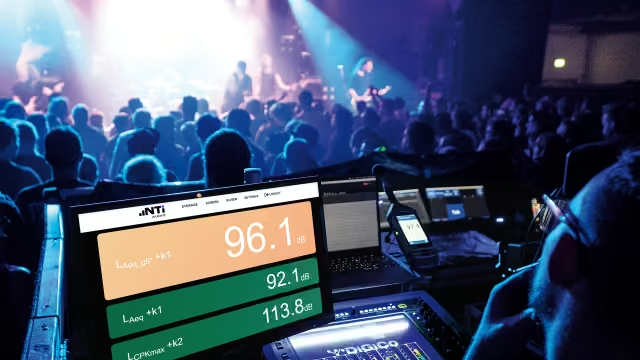
Sound is measured in decibels (dB):
- A whisper: ~30 dB
- A normal conversation: ~60 dB
- Busy traffic: ~85 dB
- Rock Concert: ~110 dB
Professionals use sound level meters to measure and optimize sound environments.
Key Acoustic Concepts Made Simple
Here are some terms you’ll often hear in building acoustics, explained in everyday language:- Reverberation: The “echo effect” when sound bounces around after the source stops.
- Reverberation Time (RT): How long it takes for that echo to fade (important in classrooms and halls).
- Sound Isolation: How well walls, floors, or ceilings block noise from other rooms.
- SPL (Sound Pressure Level): The strength of sound waves, measured in decibels.
- Sound Masking: Adding gentle background noise (like soft airflow) to reduce distractions (common in offices).
- Speech Intelligibility: How clearly, we can understand spoken words in a space.
- Sound Attenuation: How sound weakens as it travels through barriers.
- DNL (Day-Night Average Sound Level): Average noise over 24 hours, with extra weight for nighttime noise.
- IIC (Impact Isolation Class): How well a floor reduces impact sounds like footsteps.
- NLR (Noise Level Reduction): How much noise is cut down by design or materials.
- OITC (Outdoor-Indoor Transmission Class): How well a building keeps outdoor noise (traffic, construction) outside.
- HVAC Noise: Background hum from heating, ventilation, or air conditioning systems (must be controlled for comfort).
Conclusion
Acoustic design is not just about science, it is essential for quality of life. Whether through acoustic panels, sound treatment, or professional acoustic design, optimizing sound transforms how we experience spaces.
At the end of the day, acoustics is about creating spaces where people can live vibrantly, work productively, and connect meaningfully. Thoughtful acoustic design is the invisible ingredient that makes everyday life better.