
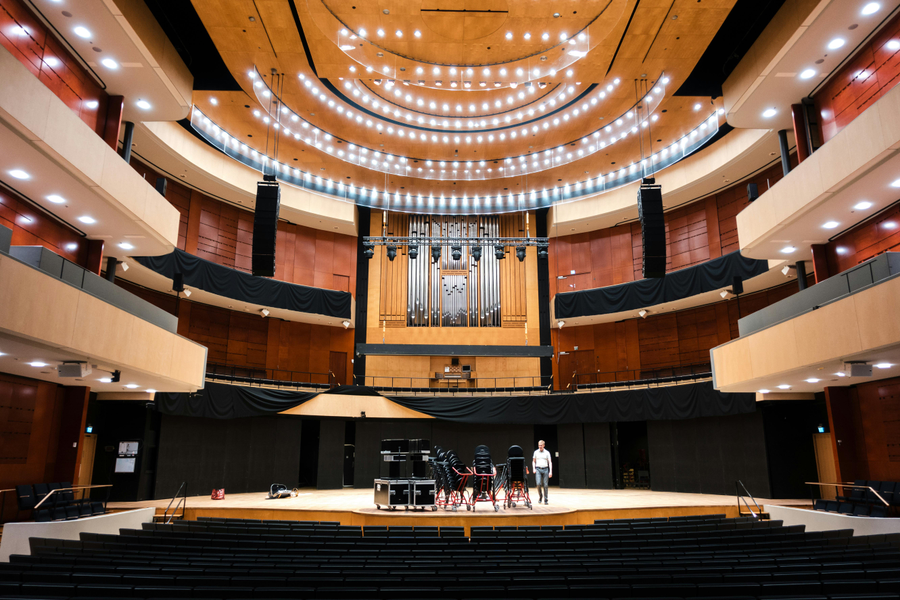
How to Maintain Good Design and Great Acoustic Performance
Designing Spaces That Sound as Good as They Look
When architects and interior designers plan a space, they often face a tricky balancing act: making it beautiful and making it sound right. Think of a restaurant where the décor is stunning but you can’t hear your friend over the noise, that’s what happens when acoustics are treated as an afterthought. The secret is to build sound solutions into the design from the very start.
Practical Ways to Blend Design and Acoustics
- Smart Material Choices
Everyday fabrics, perforated panels, and even wood finishes can double as sound absorbers. For example, a velvet curtain doesn’t just look luxurious, it also dampens echoes. Technically speaking, porous materials increase sound absorption coefficients, reducing reverberation time (RT60). - Hidden Acoustic Treatments
Acoustic panels don’t have to be ugly. They can be tucked behind wall art, ceilings, or decorative cladding. Engineers often use mineral wool or fiberglass cores wrapped in decorative facades to achieve NRC (Noise Reduction Coefficient) ratings above 0.8 without disrupting aesthetics. - Architectural Features That Work Double Duty
Curved walls, textured surfaces, and layered ceilings aren’t just eye-catching, they scatter sound waves, preventing harsh reflections. This is called diffusion, and its key in spaces like concert halls where clarity matters. - Multifunctional Furniture
Imagine a bookshelf that not only stores books but also absorbs sound. Designers are now embedding acoustic foam into partitions and furniture, creating elements that serve both form and function.
The Future: Acoustics You Don’t Even Notice
The next big leap is making acoustics invisible. Instead of bulky panels, solutions will be seamlessly integrated into the architecture.
Emerging Trends
- Smart Materials
Acoustic fabrics and nanomaterials are being developed to absorb sound at specific frequencies without thickness. For instance, meta-materials can target low-frequency bass sounds that traditional panels struggle with. - Integrated Technology
Speakers, sensors, and even adaptive acoustic controls are being embedded directly into walls and ceilings. Think of a conference room where the walls themselves adjust sound levels automatically. - Minimalist Aesthetics
Modern design loves clean lines and open spaces. Acoustic engineers are responding with ultra-thin absorbers and invisible diffusers that don’t clutter the look. - Sustainability
Eco-friendly acoustic solutions like panels made from recycled PET bottles or bamboo fibers are merging with green architecture, proving that good sound doesn’t have to harm the planet.
The Vision Ahead
Picture walking into a concert hall, office, or even your living room. The sound feels perfect, clear, balanced, and immersive. But you don’t see any obvious acoustic gear. That’s seamless acoustics: technology hidden in plain sight, enhancing human interaction while preserving design integrity.
Design and acoustics are no longer rivals. With smart materials, hidden technology, and sustainable solutions, they’re becoming inseparable partners. The result? Spaces that are visually stunning and acoustically flawless; where beauty and sound finally live in harmony.